Not really an abandoned place, this bridge had long been on my list of places that I want to visit, and during our summer vacation in 2017, the day finally came.
It was day seven of our vacation. The day before, we had picked up my mother-in-law from the train station in Dresden, because we had invited her to spend a couple of days with us and maybe explore one or two spots.
After we unexpectedly had successfully gained access to the abandoned knight's manor, we drove North towards the Rhododendron park where the bridge is located.
Unfortunately, it started raining a little on the way - and we had hoped for some sunlight so the famous reflection of the bridge would show up nicely...
As we arrived, the rain had stopped, but the sky was still cloudy when we started our walk through the park. No matter. The bridge and the surrounding elements as well as the park itself were really beautiful, and we started taking photos right away.
The only annoying thing were the groups of tourists which apparently had no intention of letting anyone take photos except themselves and kept running in front of the camera in the most impossible situations.
But it turns out that these tourists, who couldn't wait to take their photos and be on their way again, actually did us a service by stalling us, because after a while, the sun came out and we did get the photos that we had come for.
And we were lucky with our overall timing as well, because in 2018, the pond was drained to conduct extensive repairs on the bridge.
So all things considered, this was a very successful little photo opportunity at (to me) one of the most beautiful places in the world.
To check out all the photos from this place and to find out about its history, click the button below.
You might say I'm a collector. I collect rare objects. Facts, stories...I travel the roads of Germany seeking its heart.
Showing posts with label architecture. Show all posts
April 13, 2019
Tour Report: The Devil's Bridge
Eingestellt von
Jan Bommes
um
12:01:00 PM
Labels:
abandoned,
architecture,
bridge,
DDR,
decay,
Germany,
history,
monument,
old,
photography,
Sachsen,
Saxony,
Sony A7II,
sony alpha,
tourism,
tourist attraction,
travel,
Urban Exploration,
UrbEx
February 10, 2016
Sheet Music Printing Factory L.
This abandoned printing factory that was built around 1900 and was actually the first building in Germany with a structure entirely constructed out of reinforced concrete.
It was a nice short solo exploration for me as the finale of the third day of our summer vacation last year.
The location was right across from the hotel that kind of served as our base camp for our explorations. The building looked abandoned, but a huge sign on the side said that it was being refurbished into luxury apartments. But it really didn't look like much was happening there. So after we had parked the car, my wife wanted to go get some drinks and snacks for after dinner. I quickly went to check out the outside of the building. All the windows of the ground floor were boarded, but there was a small gap between the boards that I thought I might fit through. I went back to my wife, but she wanted to go on get the drinks anyway and told me to go right ahead. So I grabbed the gear, went across the (very busy) street and tried to wait for an opportune moment to slip behind the breaker box and through the gap in the door. Got a nasty scratch from a rusty nail on the way in and very probably I did NOT look inconspicuous AT ALL.
But I was in and no one seemed to care.
The preparations for the renovation obviously had begun at some point. Debris and trash had been cleaned and packed into platic bags, fuse panels had been stripped away and piled on the floors and it even looked like someone had tried to sweep the dust...
I did a quick walkthrough and took a couple of photos for about 30 or 40 minutes before I slipped out the same way I got in (and I keep telling myself that I looked more elegant the second time) and met my wife back at the car.
To find out more about the history of this architecturally interesting site and to check out all the photos from this neat little spot, click the button below.
It was a nice short solo exploration for me as the finale of the third day of our summer vacation last year.
The location was right across from the hotel that kind of served as our base camp for our explorations. The building looked abandoned, but a huge sign on the side said that it was being refurbished into luxury apartments. But it really didn't look like much was happening there. So after we had parked the car, my wife wanted to go get some drinks and snacks for after dinner. I quickly went to check out the outside of the building. All the windows of the ground floor were boarded, but there was a small gap between the boards that I thought I might fit through. I went back to my wife, but she wanted to go on get the drinks anyway and told me to go right ahead. So I grabbed the gear, went across the (very busy) street and tried to wait for an opportune moment to slip behind the breaker box and through the gap in the door. Got a nasty scratch from a rusty nail on the way in and very probably I did NOT look inconspicuous AT ALL.
But I was in and no one seemed to care.
The preparations for the renovation obviously had begun at some point. Debris and trash had been cleaned and packed into platic bags, fuse panels had been stripped away and piled on the floors and it even looked like someone had tried to sweep the dust...
I did a quick walkthrough and took a couple of photos for about 30 or 40 minutes before I slipped out the same way I got in (and I keep telling myself that I looked more elegant the second time) and met my wife back at the car.
To find out more about the history of this architecturally interesting site and to check out all the photos from this neat little spot, click the button below.
Eingestellt von
Jan Bommes
um
12:56:00 AM
Labels:
abandoned,
architecture,
civilian,
decay,
derelict,
history,
industrial,
Leipzig,
Lost Places,
old,
photography,
rotten,
ruins,
Sachsen,
Urban Exploration,
UrbEx
November 2, 2015
Oxygen Factory P.
We had spent a lot of time in the abandoned children's sanatorium, and since we were about 350 kilometers from home and it was already well past noon, there was probably only time left for one more location.
First, we tried the cultural center that was right at the center of the same city as the sanatorium, so it would've been nice to have a second location without too much distance to cover. But circling the building with the car, we could alsready see that it was ealed so tightly that there was no way in and we decided to head for the next option.
That next option proved to be a great decision.
We had decided on the Nazi's oxygen fuel factory at the V-2 site in Peenemünde.
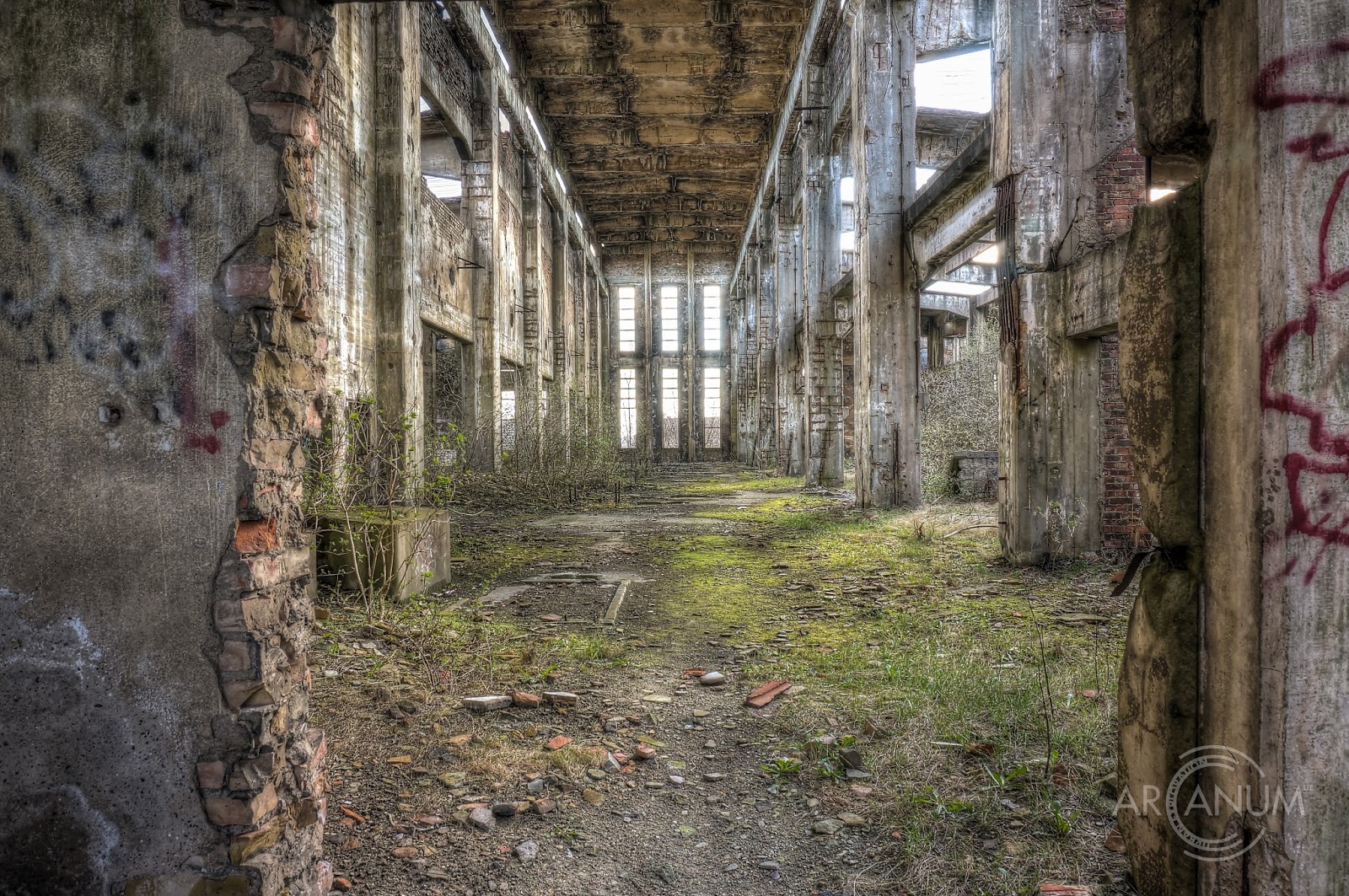
The historical relevance of this place is obvious, and in fact, most of the main V-2 site has been turned into a museum, but some relics have been abandoned and are off limits to the public - including the oxygen factory.
We had to drive a while to get there, past many other potential sites (all promising, but none as prominent as the oxygen factory), until we finally got to the location. Conventiently enough, there was a public parking lot right next to it.
So we just had to get out of the car, crawl under the fence and we were in.
The building is in fact magnificent, I think.
In spite of the terrors it represents, its construction in the traditional form of a basilica together with the afternoon light made for a fantastic atmosphere, especially with the beginning spring letting the first leaves come out.
We were not the only people there; there were some twenty-somethings taking photos (I really hate it when people don't react friendly when you greet them with a friendly Hi on location!) and as we left, there was a couple of senior citizens (I'd think around 65 or 70), and while the woman was waiting in the car, the man crawled under the fence just as we did and started looking around.
Here are some impressions from a nice afternoon ion a great location.
To find out more about the history of this place and to check out the full gallery, click the button below!
First, we tried the cultural center that was right at the center of the same city as the sanatorium, so it would've been nice to have a second location without too much distance to cover. But circling the building with the car, we could alsready see that it was ealed so tightly that there was no way in and we decided to head for the next option.
That next option proved to be a great decision.
We had decided on the Nazi's oxygen fuel factory at the V-2 site in Peenemünde.
The historical relevance of this place is obvious, and in fact, most of the main V-2 site has been turned into a museum, but some relics have been abandoned and are off limits to the public - including the oxygen factory.
We had to drive a while to get there, past many other potential sites (all promising, but none as prominent as the oxygen factory), until we finally got to the location. Conventiently enough, there was a public parking lot right next to it.
So we just had to get out of the car, crawl under the fence and we were in.
The building is in fact magnificent, I think.
In spite of the terrors it represents, its construction in the traditional form of a basilica together with the afternoon light made for a fantastic atmosphere, especially with the beginning spring letting the first leaves come out.
We were not the only people there; there were some twenty-somethings taking photos (I really hate it when people don't react friendly when you greet them with a friendly Hi on location!) and as we left, there was a couple of senior citizens (I'd think around 65 or 70), and while the woman was waiting in the car, the man crawled under the fence just as we did and started looking around.
Here are some impressions from a nice afternoon ion a great location.
To find out more about the history of this place and to check out the full gallery, click the button below!
Eingestellt von
Jan Bommes
um
9:34:00 PM
Labels:
abandoned,
architecture,
decay,
Forbidden Places,
Lost Places,
Mecklenburg-Vorpommern,
Military,
Nazi,
old,
photography,
rotten,
ruins,
Urban Exploration,
UrbEx,
war,
World War II,
WWII
April 26, 2015
Airplane Hangars K.
This part of Berlin has always had a long history in aviation.
Between 1907 and 1911, Georg Wilhelm von Siemens ordered the construction of the first rotating Airship Hangar on a plot of land here. Around the same time, a small airport known to locals under two names - Flugplatz (Airfield) B. and Flugplatz K. - was constructed north of the airship hangar and consisted of an aerodrome and several airplane hangars.
During WWI, the complex was expanded with some new hangars and a railway line (which was removed in the 1930s).
After the defeat of the German Empire, the Treaty of Versailles prohibited Germany the use of any aircraft which meant that the airbase remained abandoned and unused over the following years.
In the 1920s, the district planned to convert the area into a park, but the concept was never realized.
With the rearmament of Germany in the 1930s, the Nazis wanted to expand the existing military academies.
In 1936, the construction of the "Festungspionierschule der Deutschen Wehrmacht" began, one of the most important “contemporary” buildings of the Wehrmacht.
The Officers Casino on the south-western end of the complex was where the unconditional surrender of the German Wehrmacht against the allied forces was signed on the 8th of May 1945.
The whole complex was then taken over by the Soviet Army, and was declared a restricted area. It became the initial headquarters of the “SMAD” (Soviet Military Administration of Germany) and the KGB in Germany.
At the time, some of the flight hangars were then used by the VEB SHB (Spzialhochbau - Special Structural Engineering) – a construction company under direct command of the Stasi (State Security), but how the others were used is undocumented.
The "Festungspionierschule" has been renovated and was turned into living apartments, and the hangars on the northern end of the area have been torn down to make room for new apartment buildings.
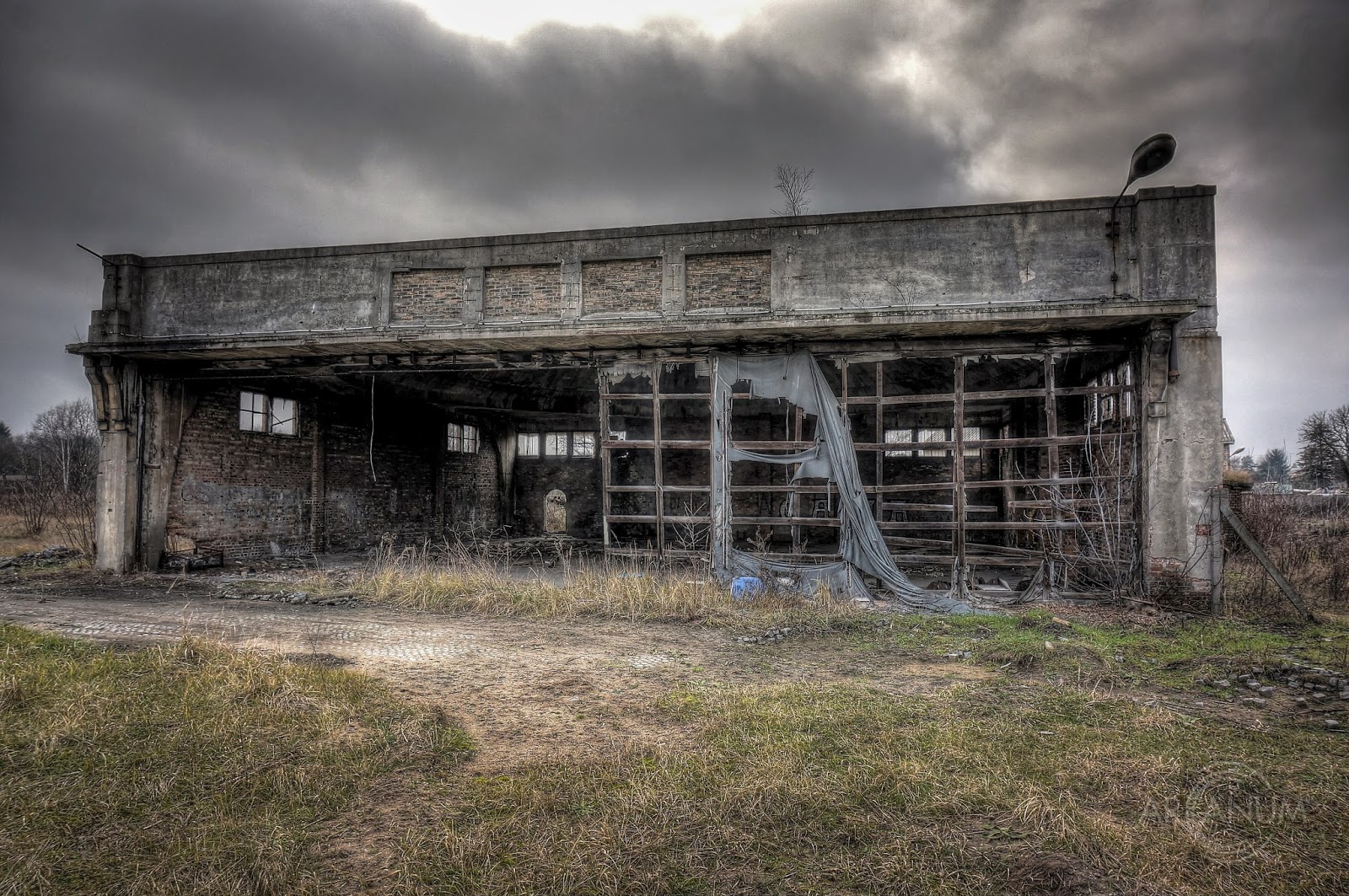
The photos you see here are from the remaining hangars in the southern part of the area.To view the full gallery, please visit my website.
Between 1907 and 1911, Georg Wilhelm von Siemens ordered the construction of the first rotating Airship Hangar on a plot of land here. Around the same time, a small airport known to locals under two names - Flugplatz (Airfield) B. and Flugplatz K. - was constructed north of the airship hangar and consisted of an aerodrome and several airplane hangars.
During WWI, the complex was expanded with some new hangars and a railway line (which was removed in the 1930s).
After the defeat of the German Empire, the Treaty of Versailles prohibited Germany the use of any aircraft which meant that the airbase remained abandoned and unused over the following years.
In the 1920s, the district planned to convert the area into a park, but the concept was never realized.
With the rearmament of Germany in the 1930s, the Nazis wanted to expand the existing military academies.
In 1936, the construction of the "Festungspionierschule der Deutschen Wehrmacht" began, one of the most important “contemporary” buildings of the Wehrmacht.
The Officers Casino on the south-western end of the complex was where the unconditional surrender of the German Wehrmacht against the allied forces was signed on the 8th of May 1945.
The whole complex was then taken over by the Soviet Army, and was declared a restricted area. It became the initial headquarters of the “SMAD” (Soviet Military Administration of Germany) and the KGB in Germany.
At the time, some of the flight hangars were then used by the VEB SHB (Spzialhochbau - Special Structural Engineering) – a construction company under direct command of the Stasi (State Security), but how the others were used is undocumented.
The "Festungspionierschule" has been renovated and was turned into living apartments, and the hangars on the northern end of the area have been torn down to make room for new apartment buildings.
The photos you see here are from the remaining hangars in the southern part of the area.To view the full gallery, please visit my website.
Eingestellt von
Jan Bommes
um
10:09:00 PM
Labels:
abandoned,
airfield,
architecture,
aviation,
Berlin,
decay,
derelict building,
HDR,
Lost Places,
old,
photography,
Urban Exploration,
UrbEx
Subscribe to:
Posts (Atom)