We found these two "old ladies" during the first tour this year. I had found a presumably abandoned railyard while looking over some Google Earth views and so we decided to pay it a quick visit as the last stop on that particular day.
What we found was a little bit disappointing - all the remaining buildings are nowadays being used by the local chapter of the railway preservation society for storing materials.
But on the grounds of the railyard we did find something after all. Two small old locomotives. United in rust, so to speak.
I have no idea what models they are or what year they were built in. The railyard is located in the area of former East Germany, so it's even possible (but improbable) that - altough the technical labels are in German - the locomotives are Soviet-made.
Anyway, it got late and started to rain, so we snapped a few quick photos and then went on our way home.
You might say I'm a collector. I collect rare objects. Facts, stories...I travel the roads of Germany seeking its heart.
May 29, 2015
May 20, 2015
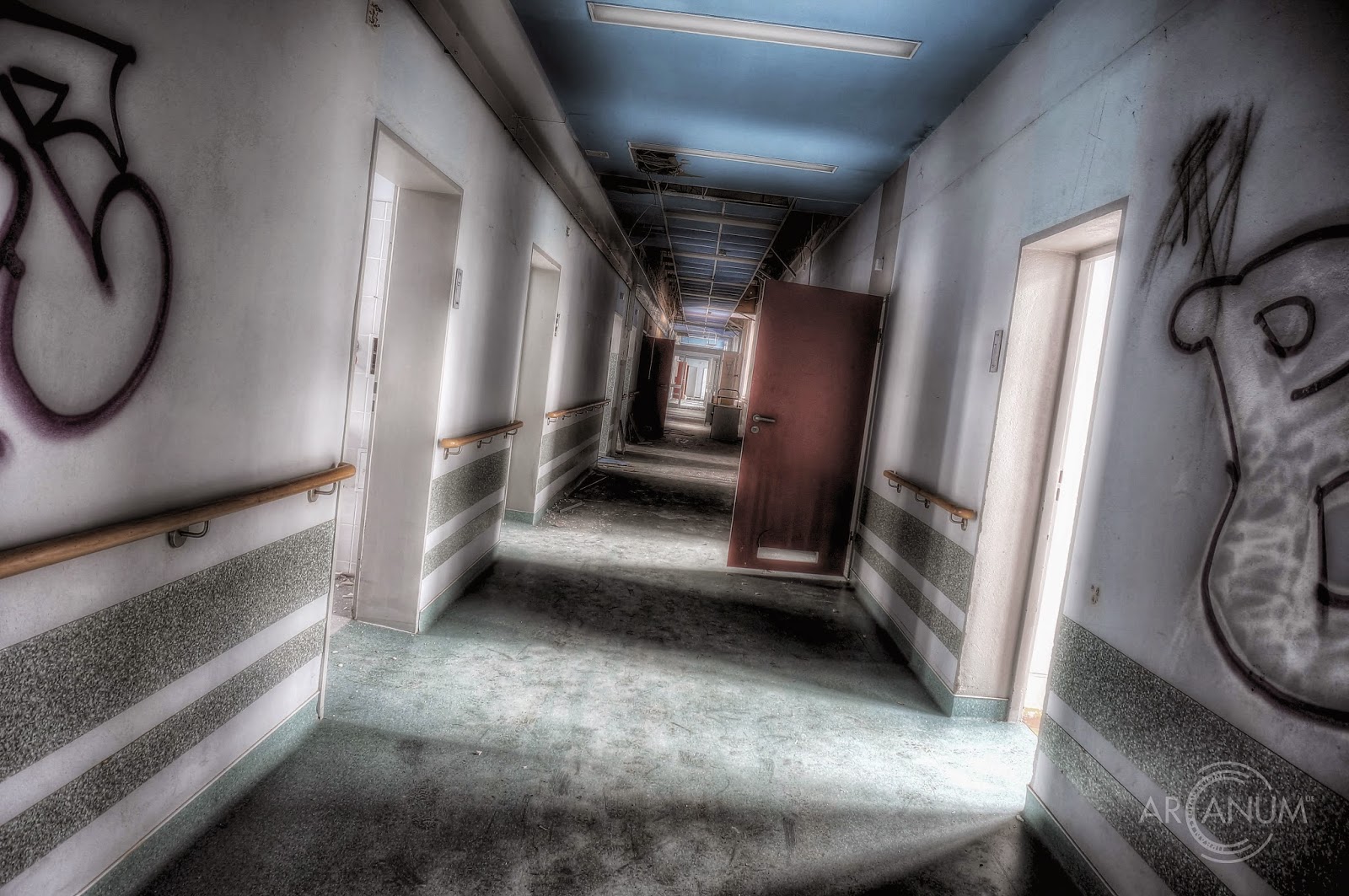
Psychiatric Hospital W. [Revisit]
It's become kind of a little tradition for my wife and me to go on an explore the first weekend of the new year. This year, same as the last, we were joined by my wife's brother and his girlfriend.
We decided to visit an interesting location that I had explored before - an abandoned psychiatric hospital in Eastern Germany.
You can find information about the history of this place and some of the pictures from my first visit here.
To check out both galleries of this place, please visit my website: Gallery 1 | Gallery 2
I used the second visit to check out a few rooms that I had overlooked the first time and to get some more angles on the pathology department.
We decided to visit an interesting location that I had explored before - an abandoned psychiatric hospital in Eastern Germany.
You can find information about the history of this place and some of the pictures from my first visit here.
To check out both galleries of this place, please visit my website: Gallery 1 | Gallery 2
I used the second visit to check out a few rooms that I had overlooked the first time and to get some more angles on the pathology department.
May 9, 2015
North-Frisian Farm House W.
This type of building is the typical farm house for a peninsula in the region of North Frisia in Germany.
The design originally was brought to the area by West Frisian immigrants during the 16th century.
For centuries, farmers have lived in these houses together with the farm animals. The German name for this type of house (not disclosed to conceal the location) results from its function to store hay.
In its original form, this type of house had a middle part where the straw was stored after the thrashing of the crops. Around this center part the living rooms were arranged, as well as the sleeping rooms for the farmhands, and the stables for horses, cows and small animals.
The hay was stored under the roof above the stables while the crop was stored above the living rooms.
Characteristic of this type of farm house is the large thatched roof, oftentimes with a height of up to 15-20 meters.
This particular farm house was built around 1800 and was abandoned about 10 years ago. It is not as large as the original type mentioned before, but still has most of the features of the original design. Living rooms, kitchen, sleeping rooms and stables all are under the same roof, and the space under the roof is used for hay storage.
There is no further historical information about this location.
To check out the full gallery, please visit my website.
The design originally was brought to the area by West Frisian immigrants during the 16th century.
For centuries, farmers have lived in these houses together with the farm animals. The German name for this type of house (not disclosed to conceal the location) results from its function to store hay.
In its original form, this type of house had a middle part where the straw was stored after the thrashing of the crops. Around this center part the living rooms were arranged, as well as the sleeping rooms for the farmhands, and the stables for horses, cows and small animals.
The hay was stored under the roof above the stables while the crop was stored above the living rooms.
Characteristic of this type of farm house is the large thatched roof, oftentimes with a height of up to 15-20 meters.
This particular farm house was built around 1800 and was abandoned about 10 years ago. It is not as large as the original type mentioned before, but still has most of the features of the original design. Living rooms, kitchen, sleeping rooms and stables all are under the same roof, and the space under the roof is used for hay storage.
There is no further historical information about this location.
To check out the full gallery, please visit my website.
Subscribe to:
Posts (Atom)