July 17, 2014

Sanatorium X

Why Sanatorium X?
Well, at the time of our visit, we had no idea which sanatorium this was. The region in which this object is located has a wealth of abandoned places, and a lot of these are sanatoriums.

Most of them were built at the end of the 19th century and have lived through turbulent times that led to a lot of name changes for these places, so if your research is not accurate enough, it's pretty easy to stumble onto something and not know what it is.
This was the case here.

Of course, I found out shortly after our visit, but unitl then, I had to store the photos on my hard drive and find a name for the folder. I called it "Sanatorium X", and when it came to finding a title for this post, I decided to stick with the name.

Anyway, this sanatorium was built at the very end of the 19th century. In the year 1903, it had a capacity of 32 patients, which was raised to 90 over the years. The building was continually expanded, starting with the first expansion in 1903, the next in 1907 and one more in 1914.

We first went around the building and checked out the area. Part of the building has already collapsed, but the remaining part looked safe enough for a trip inside.


The first part we entered were some adjacent parts. The sanatorium was closed almost 25 years ago, and time, vandals and copper thieves haven't been kind to the old hospital.


But there was no way into the main building through these rooms, so we found a different way in.
The entrance had some really nice details. Especially the tiles on the walls were really cool.


Form there we made our way into the rest of the building.
Stay tuned for more pictures from this beautiful place. I promise you lots of decay!

Part 1 | Part 2

July 15, 2014

Hotel Henry (Part 2)

In 1942, the owner of the hotel died, and the bank sold the hotel to a new joint operating company. In 1944, when the allies were advancing on Germany and the bomb attacks were increasing, the hotel was used as a military hospital, maternity home and first-aid place for wounded soldiers.

About 460 soldiers were sheltered here.

As far as I know, the attempt to turn the hotel into a sanatorium after the war has failed. The last renovations were conducted around 1970. 20 apartments were added and almost 70 rooms got their own bathroom.

After the German reunification, the hotel was used as a conference hotel and was pretty much run down until it was finally closed in 1995.

We had explored only a part of the building when we finally entered the entrance hall before the main entrance.


We entered the hotel lobby through the still working revolving door...


The upper floors looked really messy and some rooms had already collapsed. Unfortunately, we didn't have too much time to explore, but we got a nice look around.


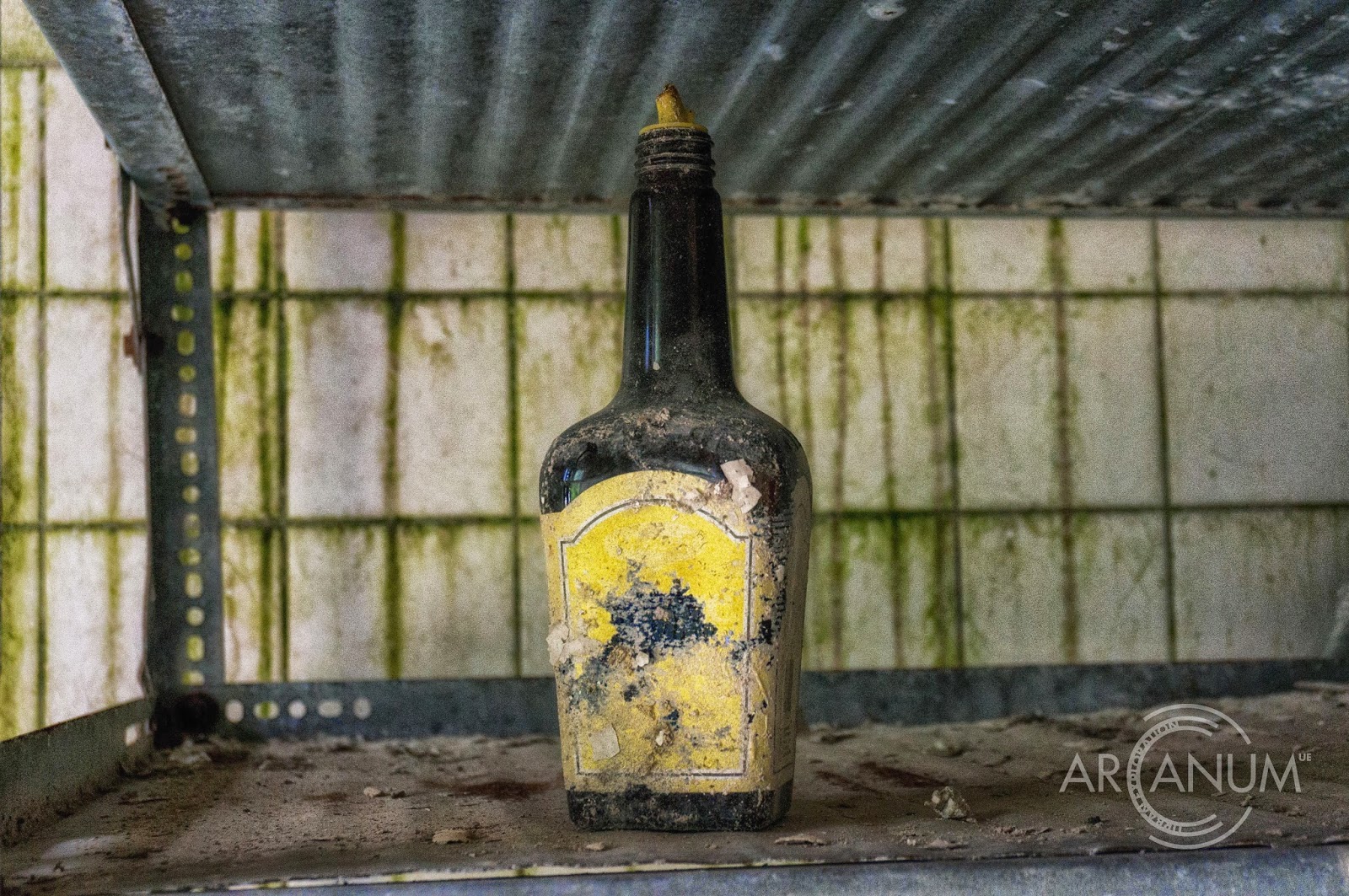
The kitchen was pretty interesting. It still had a lot of the equipment in it and even a couple of empty bottles.


After the kitchen, we made our way back out the same way we came in.


Part 1 | Part 2

July 13, 2014

Hotel Henry

It was the best hotel in town.

Built in 1898, situated right at the side of a mountain in a beautiful forest region and originally named after the man who was the German Vice Chancellor under Otto von Bismarck, the hotel soon shot to worldwide fame.

In 1904, the existing facilities weren't enough anymore to acommodate the growing number of guests from all over the world, and another wing was added to the building.

At the time, the hotel met the highest standards concerning luxury and enineering.
It had its own confectionery, a restaurant in viennese style with pool tables, a central heating system and its own gas station. All this for up to 600 guests.


The architect built the hotel in half-timbered style.


We made our way inside and found ourselves in darkness, because all the doors and windows at ground level have been boarded shut. So we had to find our way using the flashlights. Found some nice details and even an old menu with venison specials in what appeared to be back-office rooms.


After that we made our way into (I think) a part of the restaurant.


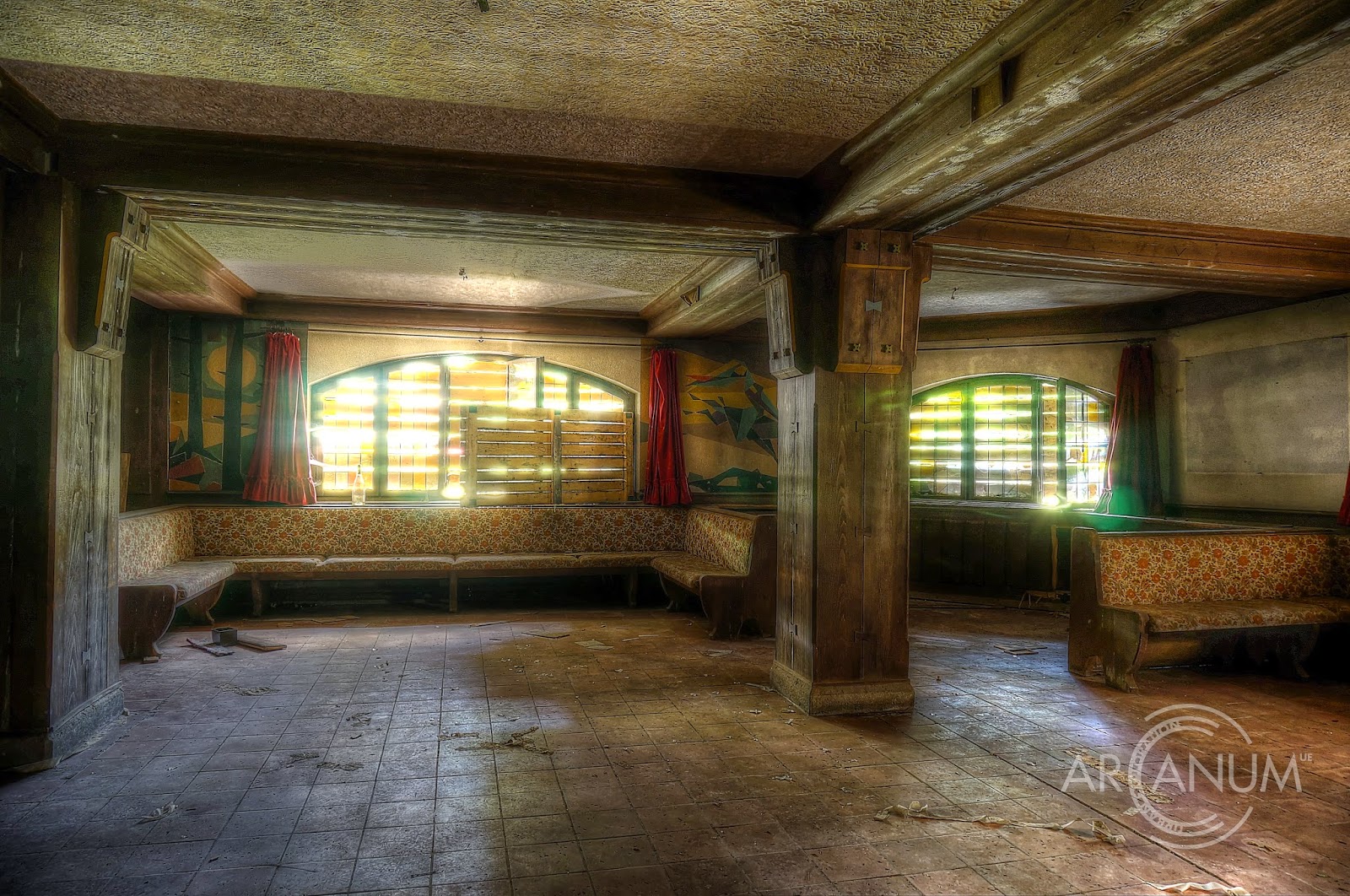
But the best bit of the first part of this exploration was the bar we found. The name of it was "Dachsbau", which means "Badger's Burrow".
Part of the last furnishing is still there, mosaics on the columns, chairs and tables.
It almost seems like it's been left after a particularly messy party some 20 years ago and is still waiting for the cleanup.


From there we went on to find the "real" entrance into the hotel...stay tuned for more!

Part 1 | Part 2
Related Posts Plugin for WordPress, Blogger...